About
The Memory of Negro Fort Podcast tells the story of how and why Americans have remembered and erased the largest autonomous community of runaway enslaved people and Native Americans in the history of the United States.
Following the War of 1812, British soldiers stationed at Prospect Bluff—located about seventy miles southwest of present-day Tallahassee—left their fortifications and weapons to a growing community of free Blacks and Indigenous people. Threatened by its symbol of Black freedom and its subversion of a growing Anglo-American racialized order, the US military destroyed what became known as “The Negro Fort” in July 1816, killing nearly all of its occupants and re-enslaving the few survivors.
Most of us today do not know about this history. Yet, Negro Fort sits at the intersection of momentous events we all know, such as the American Revolution, the Civil War, and the Civil Rights Movement, and the ideas that drove each of those major moments, such as freedom, race, and national identity. The origins of Florida’s statehood lay in the ruins of Negro Fort. This begs the question: why, then, has Negro Fort receded from American public memory? Was such an important marker in our nation’s story always forgotten?
The Memory of Negro Fort Podcast is a seven-episode narrative podcast series researched, written, narrated, and produced by UCF graduate history students Sebastian Garcia and John Lancaster, and hosted by the UCF Center for Humanities and Digital Research, with a gift that was made as an extension of the American Historical Association’s Sinclair Workshops for Historical Podcasting.
Our Origin Story
Sebastian and John co-conceptualized The Memory of Negro Fort Podcast in Dr. Barbara Gannon’s graduate colloquium on American slavery in the Spring of 2024. For the final assignment in that course, Dr. Gannon tasked students with creating a public history project on slavery in Florida. Sebastian and John partnered to develop a podcast about Negro Fort, a subject they learned from one of their course readings earlier in the semester. Stunned by its contemporary obscurity, despite its historical significance to Florida and the US, Sebastian and John decided to break new ground in the limited historiography about Negro Fort by researching its memory. The decision to combine podcasting and memory studies for this public history project stemmed from the expertise each brings: Sebastian, with his professional experience in podcasting and radio, and John, with his academic focus on memory in other projects. They submitted three proof-of-concept scripts for the final assignment, which Dr. Gannon encouraged them to further develop beyond the classroom.
Sebastian and John followed Dr. Gannon’s advice, enrolling in the subsequent research seminar course on American slavery the following fall semester. Here, they both sharpened their research findings regarding the memory of Negro Fort, as the final for that course was a traditional academic research paper. Thus, through Dr. Gannon’s pedagogy, Sebastian and John laid the groundwork to remediate their research into a public-facing project via podcasting. During this semester, Jim Ambuske, an independent scholar, historian, and podcaster, invited Sebastian to pitch the developing Negro Fort podcast at the inaugural Sinclair Workshops for Historical Podcasting during the 138th Annual Meeting of the American Historical Association (AHA) in January 2025. Sebastian’s presentation at the AHA elevated the status of this project by attracting interest from an outside donor, with whom Sebastian, John, Dr. Scot French, and Jacque Willever worked closely to secure. As Sebastian and John commented, they were committed to finishing the project before the AHA, but the external gift funding legitimized the project as a professional production for public consumption, opening a range of professionalizing opportunities that they both continue to appreciate and embrace. Presentations at other conferences, including the annual meetings of the Florida Historical Society and the Southern Historical Association, helped sharpen ideas and generate more interest in the project. This origin story is meant to demonstrate the potential of classroom projects and focused pedagogy in inspiring and professionalizing students in ways that also align with current trends within the larger discipline of history—a case study in which the team emphasized in their premiere of The Memory of Negro Fort Podcast during the 139th Annual Meeting of the American Historical Association in January 2026.
Meet the Team
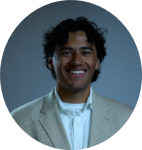
Creator | Producer
Sebastian Garcia is a Master’s History student at the University of Central Florida whose research focuses on American technology and media history in the twentieth century. Sebastian serves as the UCF Department of History’s podcast producer, which includes series such as Knights HistoryCast and the award-winning The 2023 UCF VLP Institute Podcast Series. As the podcast producer, he revitalized the department’s podcasting apparatus, which had lain dormant for almost three years before his tenure. This revitalization turned into expansion, as Sebastian led efforts to extend the Department’s model into a college-wide network with the Center for Humanities and Digital Research at UCF, using The Memory of Negro Fort Podcast as the inaugural series. Sebastian co-conceptualized The Memory of Negro Fort with John Lancaster during Dr. Barbara Gannon’s graduate colloquium on American slavery in the Spring of 2024. In addition to co-researching, writing, editing, and producing the podcast, Sebastian represented the production team when he pitched the series at the inaugural Sinclair Workshops on Historical Podcasting at the 2025 American Historical Association’s annual meeting, which further elevated the podcast.

Creator | Producer
John Lancaster is a Master’s History student at the University of Central Florida whose research focuses on twentieth-century European and American history and culture. Before pursuing an MA in History, he earned BA degrees in History and English Literature, and an MA in English Literature, also from UCF. This background informs his interdisciplinary approach to academic scholarship. His History Master’s thesis work investigates how the 1987 Klaus Barbie trial offers an apt lens to understand how the memories of World War II, the Holocaust, and colonialism in France intertwined and collided. While at UCF, John proudly served as a graduate research assistant for the Veterans Legacy Program (VLP), a Department of Veterans Affairs-funded partnership with the National Cemetery Administration through which UCF students, faculty, staff, and K-12 teachers across Florida collaborate to extend the memorialization of veterans buried in National Cemeteries across the state. John co-researched, wrote, and produced The Memory of Negro Fort Podcast.

Academic Consultant
Barbara Gannon, Ph.D., is a Professor of History at the University of Central Florida whose research focuses on military history, the Civil War and its memory, Reconstruction, Veterans’ history, and African American history. A seminal Civil War historian, she received the Center for Civil War Research’s Best First Book on the Civil War award for her 2011 monograph, The Won Cause: Black and White Comradeship in the Grand Army of the Republic (Chapel Hill: University of North Carolina Press). Barbara also leads the UCF Community Veterans History Project, a public history initiative that collects and preserves the stories of local military veterans. The concept of The Memory of Negro Fort Podcast emerged as a collaborative public history project about Florida slavery in her graduate colloquium on American slavery in the Spring of 2024. She remained central in providing academic guidance as Sebastian and John’s research on Negro Fort remembrance developed in her subsequent Fall 2024 seminar and continued to offer support as they remediated their research into The Memory of Negro Fort Podcast.

Department Coordinator
Scot French, Ph.D., is Director of Public History, Associate Professor of Digital and Public History, and an Associate Director of the Center for Humanities and Digital Research at UCF. As faculty advisor, Dr. French helped launch The Memory of Negro Fort Podcast as the inaugural podcast in CHDR’s Humanities Podcasting Network, coordinating with podcast producers Sebastian Garcia and John Lancaster on the conceptual pitch and working with the College of Arts & Humanities development team to secure external gift funding.
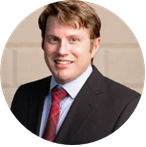
Historian Podcaster Consultant
Jim Ambuske is a historian of the American Revolution, Scotland, and the British Atlantic World. He received his Ph.D. in history from the University of Virginia in 2016. He is the author and co-author of several publications on the American Revolution, transatlantic legal history, and King George III. Ambuske is also the lead editor and narrator of Worlds Turned Upside Down and the co-host of Revolutions in Retrospect with Dr. Lynn Price Robbins. Ambuske is formerly the co-head of R2 Studios, a division of the Roy Rosenzweig Center for History and New Media at George Mason University, and former director of the Center for Digital History at George Washington's Mount Vernon.
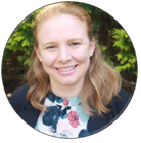
Historian Podcaster Consultant
Jeanette Patrick is an award-winning public historian and podcaster. She was previously the Head of R2 Studios, the podcast division of the Roy Rosenzweig Center for History and New Media at George Mason University. At R2 Studios, she oversaw the development and production of all the studio's podcasts and released over 100 episodes. In previous positions at George Washington's Mount Vernon and the National Women's History Museum, Patrick created a wide variety of in-person and digital content, including writing web pages, timelines, and scripts used to produce audio and AR tours, live action films, animated videos, podcasts, and livestreams.