About Us: The Center for Humanities and Digital Research
The humanities study human culture and experience through critical, interpretive, and historical approaches. The Center for Humanities and Digital Research (CHDR) takes that work seriously and asks what becomes possible when the humanities has digital infrastructure behind it.
CHDR was founded in 2007 and succeeded the Humanities Center Initiative, which has hosted conferences and speakers and supported research projects since 2005. In 2020, it received an NEH Challenge Grant to expand facilities and equipment, build community partnerships, and further develop public programming and outreach. That investment in infrastructure is reflected in the tools CHDR now makes available to researchers, students, and community partners alike.
The mission of CHDR is to serve as an engine for cross-disciplinary collaboration that facilitates the exchange of ideas and the sharing of knowledge through the co-hosting of workshops, guest speakers, and conferences. To support this collaborative work, we have the tools to handle even the most demanding digitization needs
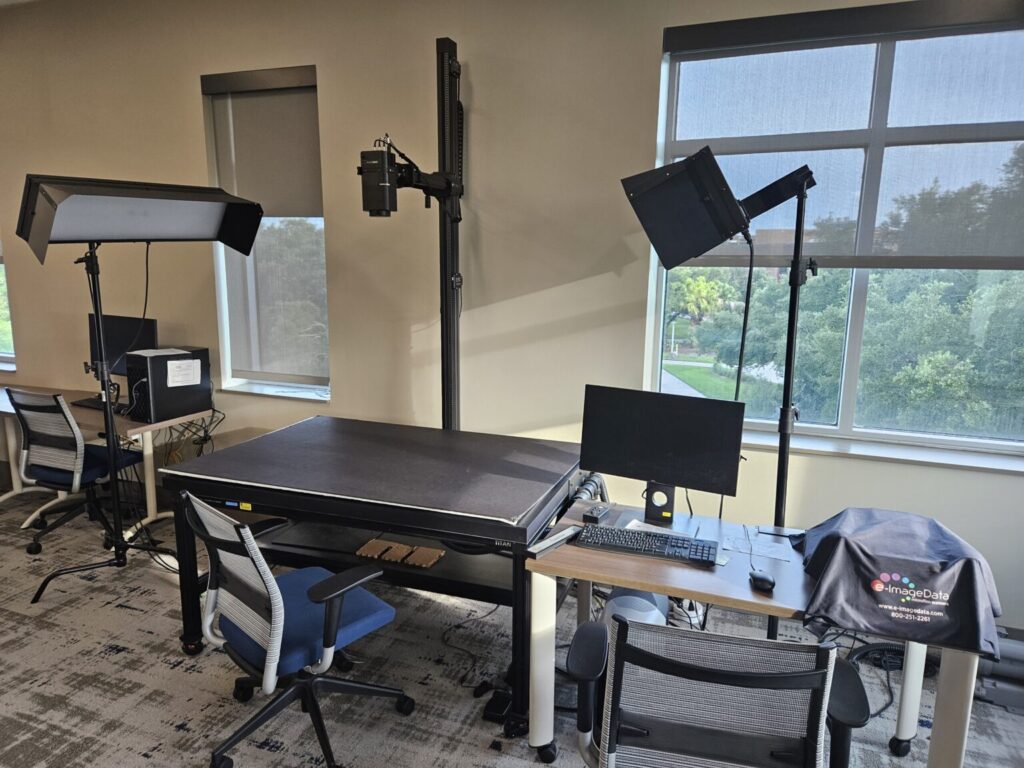
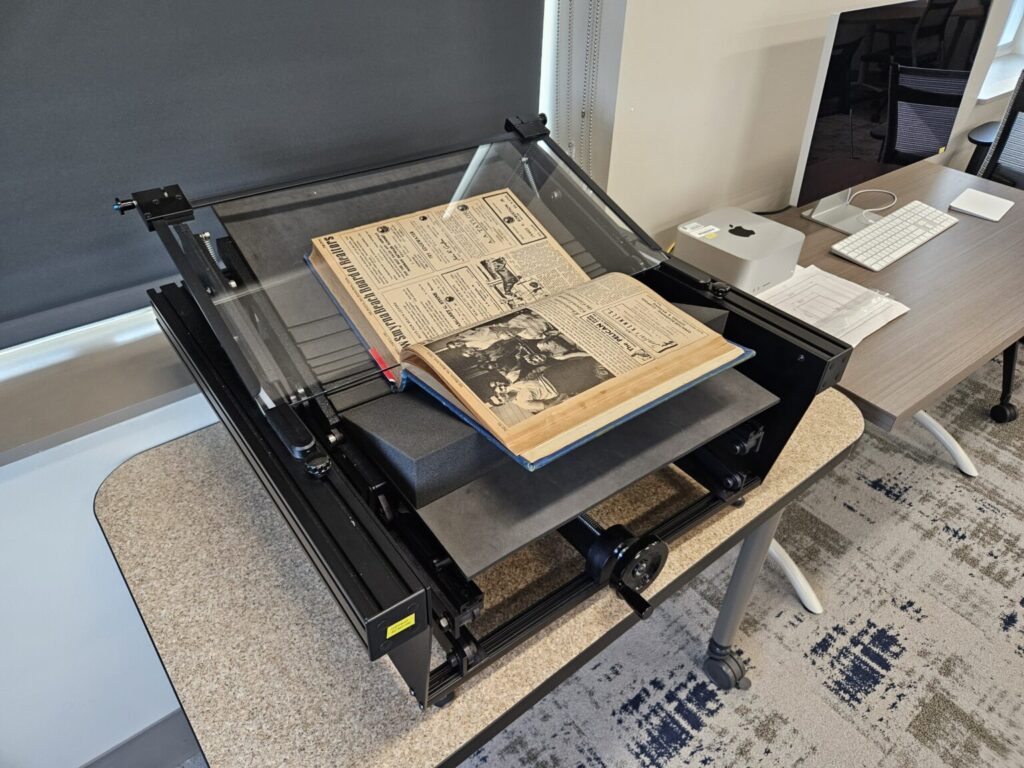
As shown in the image above, our DT Titan scanner handles large-format materials such as maps, posters, and oversized archival documents at exceptional speed, making it one of the more capable digitization resources available to humanities researchers in the region.
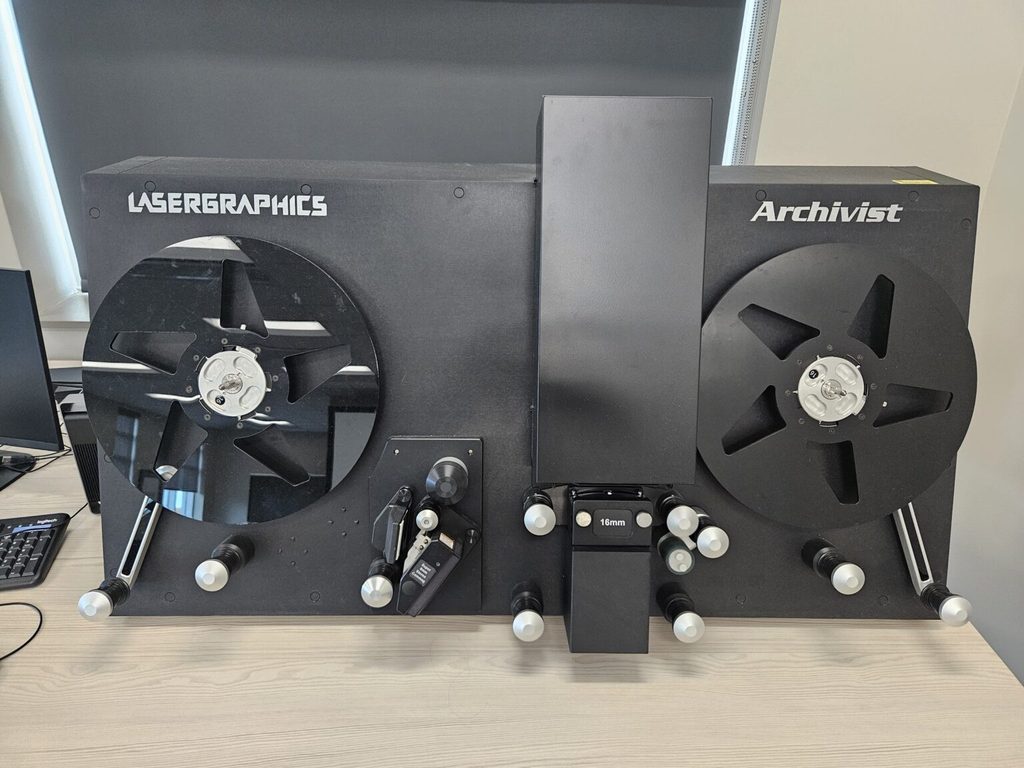
We also operate a Lasergraphics film scanner, which allows us to convert analog video recordings to digital formats before those materials degrade beyond recovery.
CHDR provides space, resources, expertise, programming, and digital research support for individuals and scholars to explore new ways of understanding and educating others about the diversity of cultures and ideas.
For Faculty & Staff
For faculty and staff researchers, we offer consultation on technical requirements, assistance identifying and pursuing grant opportunities, and hands-on collaboration on digital humanities projects both new and ongoing. For an example of the kind of work this can look like in practice, see our interactive learning project on Cuba, developed in collaboration with Associate Professor, Karina Cespedes, in the Department of Philosophy.
For Students
For students, the center has a particular mandate around high-impact learning. Digital technology allows the study of traditional and recent material in new ways and provides new paradigms of scholarship to work in. We support learning opportunities for all students but are especially well suited to the undergraduate minor in Digital Humanities and all specializations in the Texts and Technology PhD. We offer both funded and unfunded work on projects and journals affiliated with CHDR, as well as internships for credit. Graduate research assistantships are funded in CHDR through the Texts & Technology PhD program.
For Community
Even beyond the university, there are meaningful opportunities for working with CHDR. We have fostered community partnerships on projects as wide-ranging as archiving and digital conversion of assets, to shooting drone footage, recording spaces in 360 video, and performing detailed laser scanning of artifacts and buildings. If you are in possession of historical records in print, audio, or video, a library of books or journals, or work at a historical location and are seeking conservation and preservation support, we want to hear from you. To see what this kind of community partnership can produce, take a look at our collaborative project with the Navajo Nation.